

Entering the world of solar energy can feel overwhelming with its specialized terminology. Whether you’re researching solar installation for your home or simply trying to understand your utility bill, knowing the language of solar power is essential. This comprehensive guide breaks down the most important solar panel terms you’ll encounter, from technical specifications to financial incentives. Understanding these concepts will empower you to make informed decisions about your solar investment and communicate effectively with installers and energy providers.
Units of Power and Energy
W (Watt) – The basic unit measuring electrical power at any given moment. A single solar panel typically produces 300-400 watts under ideal conditions.
kW (Kilowatt) – Equal to 1,000 watts, this measures the instantaneous power output of your solar system. A typical residential system ranges from 5-10 kW.
kWh (Kilowatt-hour) – The unit measuring actual energy consumption or production over time. If a 5 kW system runs for one hour, it produces 5 kWh. This is what appears on your electricity bill.
kWp (Kilowatt peak) – The maximum power output your solar system can produce under ideal laboratory conditions (standard test conditions). It represents your system’s rated capacity.
MW (Megawatt) – Equal to 1,000 kilowatts or 1 million watts. This measures larger commercial or utility-scale solar installations.
GW (Gigawatt) – Equal to 1,000 megawatts or 1 billion watts. This measures national or regional solar capacity.
Solar Technology and Systems
PV (Photovoltaic / Photovoltaics) – The technology that converts sunlight directly into electricity using semiconductor materials.
Solar cells – The smallest functional units within a solar panel, typically made from silicon, that perform the actual conversion of light to electricity.
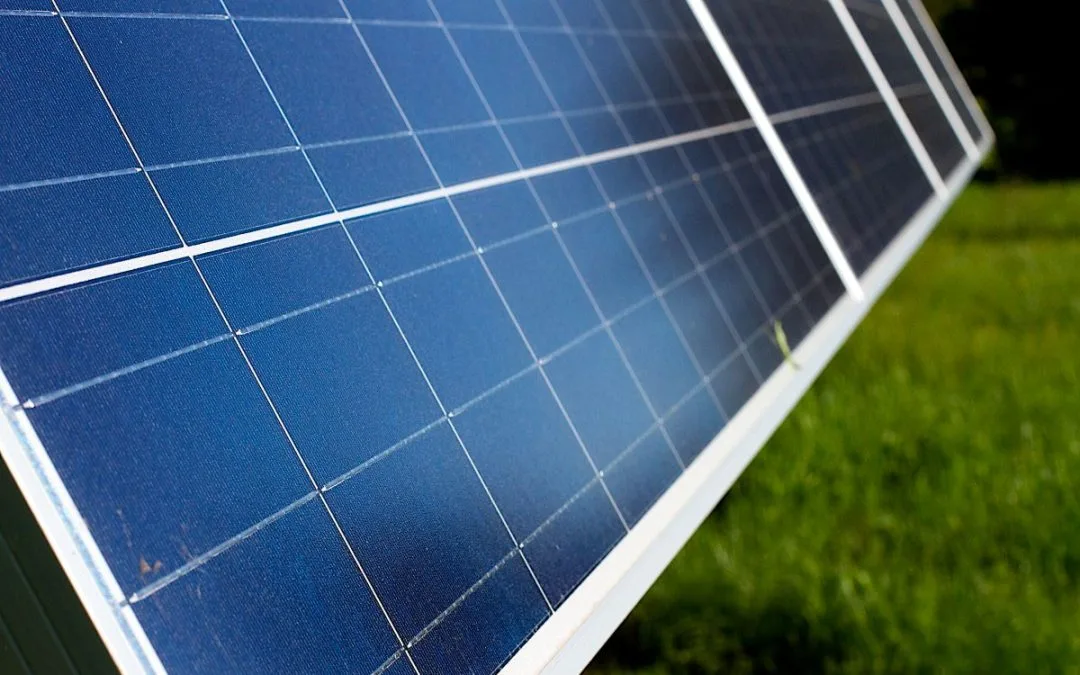
Solar module – Another term for a solar panel; a complete assembly of solar cells, protective glass, frame, and backing material.
Solar panel efficiency – The percentage of sunlight hitting a panel that gets converted into usable electricity. Modern panels typically achieve 15-22% efficiency.
Temperature coefficient – The rate at which panel efficiency decreases as temperature rises above 25°C (77°F). Lower negative values indicate better hot-weather performance.
Inverter – The device that converts DC electricity produced by solar panels into AC electricity used by your home and the grid.
Power output / rating – The amount of electricity a solar panel or system produces under specific conditions, measured in watts or kilowatts.
Production ratio – The ratio of estimated energy production to the system’s nameplate rating, accounting for real-world conditions like weather and shading.
Semiconductor – A material (typically silicon) with electrical conductivity between a conductor and insulator, essential for photovoltaic energy conversion.
Azimuth – The compass direction your solar panels face, measured in degrees. In the U.S., 180° (true south) is typically optimal.
Building-integrated photovoltaic (BIPV) – Solar technology integrated directly into building materials like roof shingles, facades, or windows.
Ground-mounted solar – Solar panels installed on ground-level racks rather than rooftops, useful when roof conditions aren’t suitable.
Off-grid – Solar systems that operate independently from the utility grid, typically requiring battery storage for nighttime power.
Solar carport canopy – Solar panels installed on structures covering parking areas, providing both shade and electricity generation.
Solar-plus-storage – Systems combining solar panels with battery storage, allowing you to store excess solar energy for nighttime or emergency use.
ESS (Energy Storage Systems) – Battery systems that store electricity, increasingly popular for backup power and maximizing solar self-consumption.
Financial & Incentives
Price per watt ($/W) – The total system cost divided by its capacity, standardizing pricing for easy comparison. Residential systems typically cost $2.50-$3.50 per watt installed.
Property-Assessed Clean Energy (PACE) – Financing programs allowing solar costs to be repaid through property tax assessments over 10-20 years.
Payback period – The time required for energy savings to equal your initial solar investment, typically 6-10 years for residential systems.
Power purchase agreement (PPA) – A financing arrangement where a third party owns your solar system and you buy the electricity it produces at a predetermined rate.
Solar lease – Similar to a PPA, but you pay a fixed monthly fee for the system rather than paying per kWh produced.
Solar lease escalator – An annual percentage increase built into some solar leases, typically 2-3%, accounting for inflation and rising utility rates.
Solar loan – Financing that allows you to own your system while making monthly payments, similar to a home improvement loan.
Third-party owner (TPO) – Companies that own solar systems installed on customer properties through leases or PPAs.
Federal investment tax credit (ITC) – A tax credit currently offering 30% off solar installation costs, one of the most valuable solar incentives available.
Depreciation-based incentives – Tax benefits allowing businesses to deduct solar system costs through accelerated depreciation schedules.
Net metering / Virtual net metering (VNM) – Policies crediting solar owners for excess electricity sent to the grid. VNM extends this benefit to community solar subscribers.
Performance-based incentive (PBI) – Payments based on actual solar energy production rather than system size, paid over time.
Tax credit – A dollar-for-dollar reduction in taxes owed, more valuable than tax deductions which only reduce taxable income.
Bill credit – Credits on your utility bill for excess solar production sent to the grid under net metering programs.
REC (Renewable Energy Certificate / Solar renewable energy credit (SREC)) – Tradeable certificates representing the environmental benefits of solar energy production, providing additional income in some states.
NABCEP Certification – North American Board of Certified Energy Practitioners certification, the gold standard credential for solar installers, demonstrating expertise and professionalism.
UL / IEEE – Underwriters Laboratories and Institute of Electrical and Electronics Engineers standards ensuring solar equipment safety and performance through rigorous testing protocols.
AHJ (Authority Having Jurisdiction) – The local government body (typically building or electrical department) that reviews and approves solar installation permits and inspections.
FIT (Feed-in Tariff) – A policy mechanism where utilities pay solar owners a fixed rate for electricity fed into the grid, typically higher than retail rates to encourage solar adoption.
VOST (Value of Solar Tariff) – A rate structure compensating solar owners based on the calculated value their solar energy provides to the grid and society, including avoided fuel costs and environmental benefits.
Buy-All, Sell-All Programs – Arrangements where the utility purchases all solar production at one rate while the homeowner buys all consumption at another rate, separating production from consumption credits.
Energy Transition & Market
Energy transition – The global shift from fossil fuels to renewable energy sources like solar and wind power.
Grid parity – The point where solar electricity costs the same as or less than grid electricity, achieved in most U.S. markets.
Levelized cost of energy (LCOE) – The average cost per kWh over a system’s lifetime, accounting for all installation and maintenance costs.
Community solar – Shared solar installations allowing multiple subscribers to benefit from one solar array, ideal for renters or those with unsuitable roofs.
Developer – Companies that design, finance, and build solar projects, particularly larger installations.
Investor – Entities providing capital for solar projects in exchange for tax benefits or revenue returns.
Low-and-moderate income (LMI) communities – Populations targeted by special solar programs offering additional incentives and access to solar benefits.
Provider – Companies offering solar services, from installation to maintenance and financing.
Subscriber – Individuals or organizations participating in community solar programs, receiving credits for their share of production.
Understanding solar terminology is just the beginning of your clean energy journey. At AllSeason Solar & Roofing in New Jersey, we transform complex solar concepts into real-world savings for homeowners throughout the region. Ready to move from learning about solar to living with it? Reach out to us for a complimentary consultation and let’s design the perfect solar solution for your home!